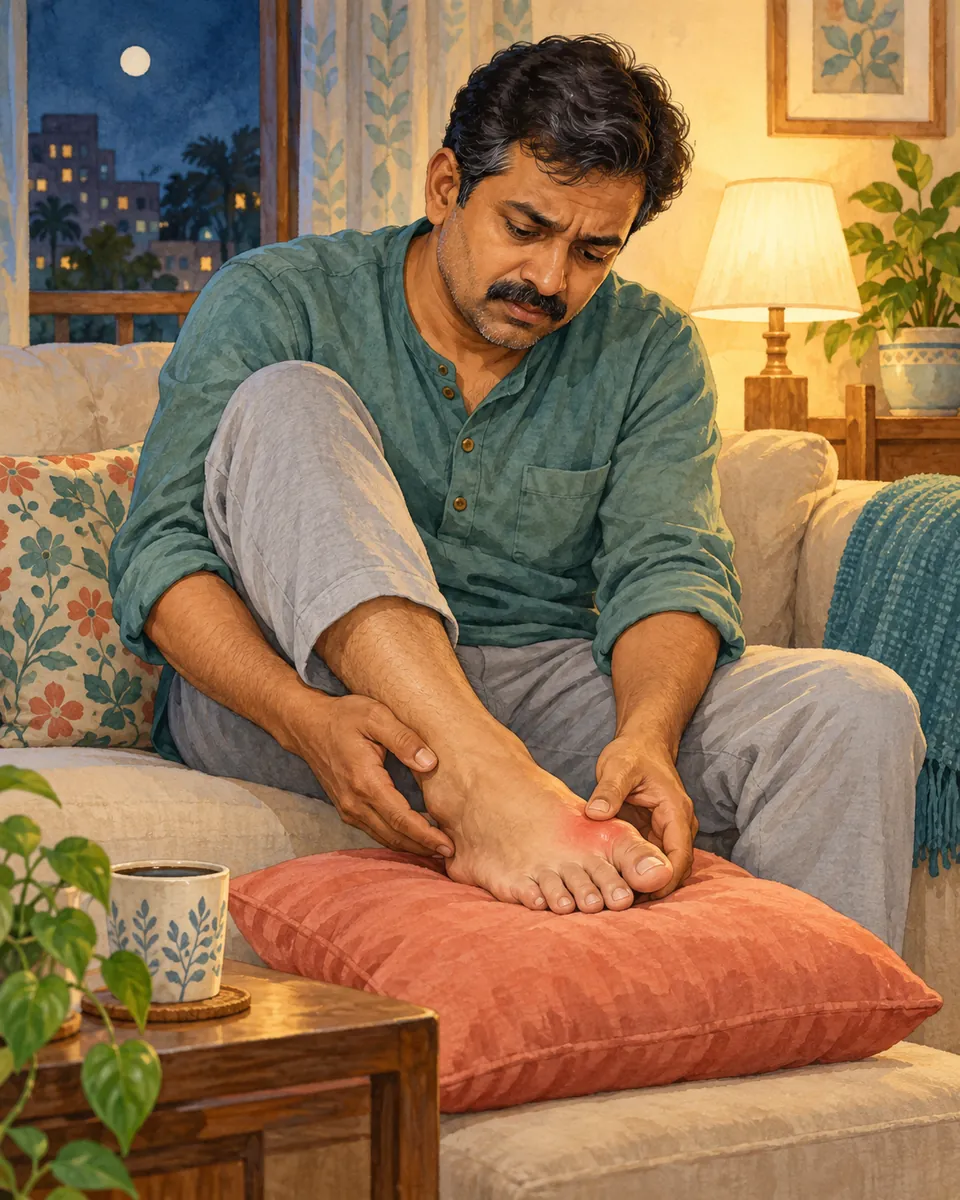
Gout is a form of arthritis caused by a build-up of urate crystals in and around joints. It can cause a sudden episode of intense pain, swelling and tenderness called a gout flare.
Urate, also called uric acid, is a substance the body naturally produces. Your kidneys remove much of it through urine. When the level in your blood stays high enough for long enough, crystals can form. These crystals may remain in a joint even after a painful flare has settled.
What does a gout flare feel like?
A gout flare often starts suddenly, sometimes overnight. The affected joint may become:
- Extremely painful, even when lightly touched
- Swollen and warm
- Red or darker than the surrounding skin
- Difficult to move or put weight on
The joint at the base of the big toe is a common site. Gout can also affect the foot, ankle, knee, wrist, fingers or elbow. One joint is often affected at a time, although several joints can be involved.
Pain is usually most severe early in the flare. It may then improve over days or weeks, even without treatment. Feeling well between flares does not mean the urate crystals have disappeared.
What are tophi?
If urate remains high over time, larger deposits of crystals can form under the skin. These are called tophi. They may appear as firm lumps near the fingers, toes, elbows or ears.
Tophi are a sign that gout has been present for some time. They can cause discomfort, interfere with movement and contribute to joint damage. Sustained urate-lowering treatment can gradually shrink them.
Why did I develop gout?
Gout develops when urate builds up and forms crystals. Often, the kidneys do not remove enough urate. Inherited factors play an important role. Kidney disease, excess body weight and some medicines can also raise urate levels or increase the chance of gout.
Food and alcohol can contribute, but gout is not simply the result of eating the wrong foods. Many people with gout eat a healthy diet. Your clinician can review possible contributing factors without blaming you for the condition.
Can anything trigger a flare?
A flare may follow dehydration, heavy alcohol intake, an illness, surgery or a change in urate levels. Some people notice a link with particular foods or drinks; others cannot identify a trigger.
Starting a medicine that lowers urate can temporarily make flares more likely while existing crystal deposits begin to change. This does not mean the medicine is making gout worse in the long term. Your clinician may prescribe another medicine for a time to reduce the chance of these early flares.
Does a high uric acid level mean I have gout?
No. Some people have a high blood urate level but never develop gout. A urate blood test is useful, but the result must be considered alongside your symptoms and examination.
A urate level can also be lower than usual during a flare. If gout is still suspected despite a lower result, your clinician may repeat the test after the flare has settled.
How is gout diagnosed?
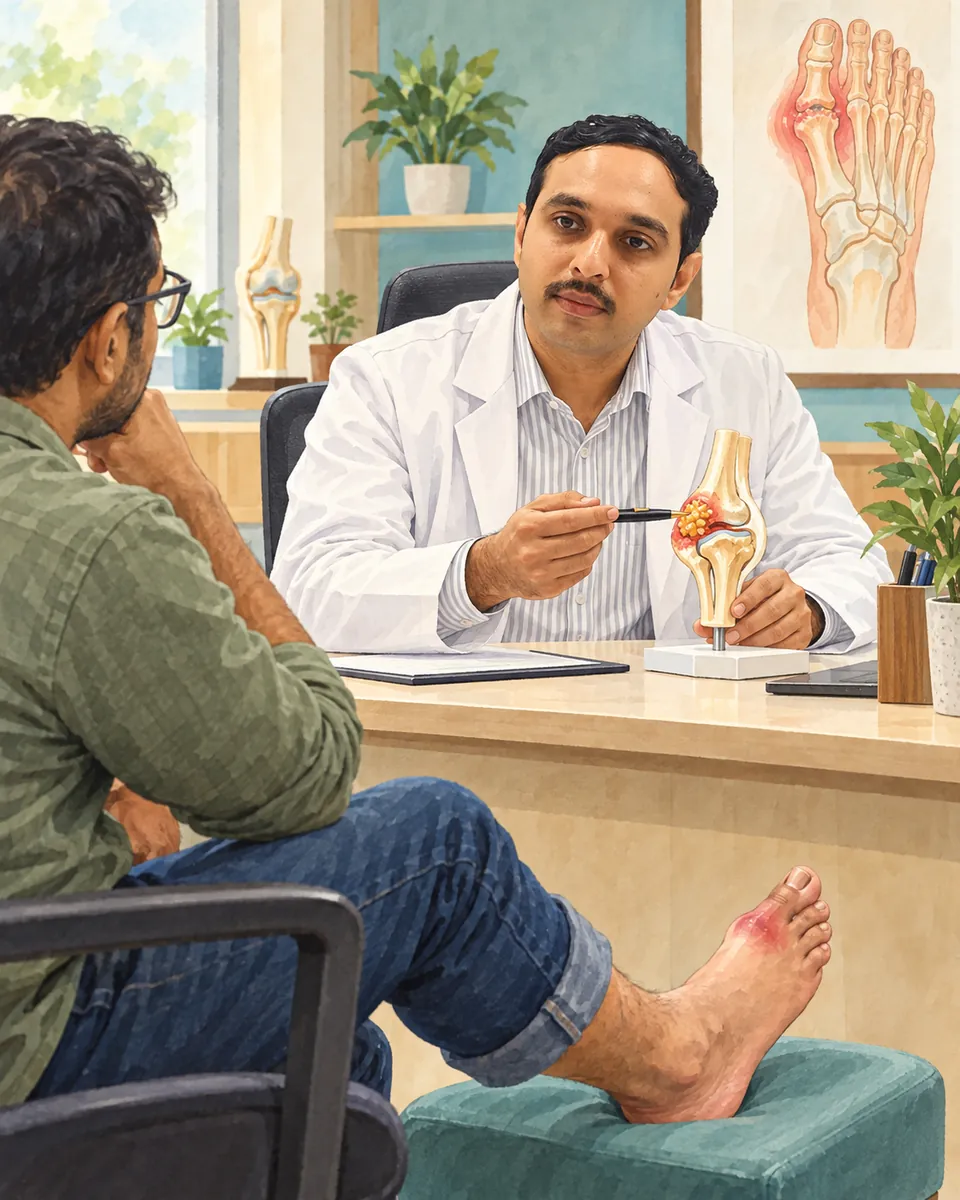
Your clinician will ask how quickly the pain began, which joint was affected, how long it lasted and whether similar episodes have happened before. They will examine the joint and may order a blood urate test.
If the diagnosis is uncertain, a clinician may remove a small amount of fluid from the swollen joint with a needle. Finding urate crystals in that fluid confirms gout. The fluid can also be checked for infection. Ultrasound or a specialised scan may sometimes help when the diagnosis remains unclear.
A newly hot, swollen joint should not automatically be labelled gout, especially if this is your first episode or you also have fever. A joint infection can look similar and needs urgent treatment.
How is a gout flare treated?
Treatment works best when started early. If you have had gout before, ask your clinician for a clear plan so you know what medicine to take when a flare begins.
The main options are:
- Non-steroidal anti-inflammatory drugs (NSAIDs): These can reduce pain and inflammation, but may be unsuitable if you have kidney disease, a stomach ulcer, certain heart problems or take particular medicines.
- Colchicine: This can help control a flare. It can cause diarrhoea or nausea, and the dose needs particular care if you have kidney problems or take medicines that interact with it.
- Steroids: A short course of tablets or an injection into an affected joint may be considered when appropriate.
Your clinician will choose treatment based on your health conditions and other medicines. Do not combine several anti-inflammatory medicines or repeat doses beyond your prescribed plan.
What can I do while the joint is painful?
Rest the joint briefly and avoid activities that sharply increase the pain. A cold pack wrapped in a towel may help; apply it for short periods and protect your skin. Keep drinking fluids as you normally would, unless you have been advised to limit them because of a heart or kidney condition.
If a flare is not improving as expected, contact your clinician. A change in the usual pattern may need reassessment.
Why might I need daily treatment when I only have occasional flares?
Flare medicines treat inflammation and pain. They do not remove the underlying urate crystals.
Urate-lowering treatment reduces the urate level in your blood. When the level remains low enough, existing crystals can gradually dissolve. This takes time, but it addresses the cause of gout rather than only treating each attack.
Daily urate-lowering treatment is particularly important for people with frequent flares, tophi or joint damage caused by gout. Your clinician may also discuss it in other circumstances, including kidney disease or a history of kidney stones. The decision is individual.
Which medicines lower urate?
Allopurinol is often the first medicine considered. Febuxostat is another option. Other medicines may be suitable in particular circumstances. Your clinician will consider your kidney function, other health conditions and medicines when making a choice.
These medicines are generally started at a low dose and adjusted using repeat blood urate tests. The starting dose is not necessarily the dose you will stay on. Do not adjust it yourself.
If you develop a new skin rash while taking allopurinol, stop taking it immediately and seek medical advice promptly. A rash with blistering, mouth sores, fever, facial swelling or breathing difficulty requires emergency medical attention. Do not restart allopurinol on your own.
What urate level should treatment aim for?
For most people taking urate-lowering treatment, the usual goal is a blood urate level below 6 mg/dL. Some people with more severe gout or tophi may be given a lower individual target.
Your clinician will repeat the blood test while adjusting treatment and review it periodically after you reach your target. Reaching the target once is a good step; keeping urate below target over time is what allows crystals to dissolve and helps prevent flares.
Why am I still having flares after starting allopurinol?
Flares can occur during the first months of urate-lowering treatment as crystal deposits begin to change. Your clinician may prescribe low-dose colchicine or another suitable anti-inflammatory medicine for a limited period to reduce this risk.
If you have a flare while taking allopurinol or another daily urate-lowering medicine, usually continue your regular dose and treat the flare according to your agreed plan. Do not stop and restart the daily medicine repeatedly unless your clinician advises you to.
A flare after starting treatment does not necessarily mean the treatment has failed. Your team will check your urate level and adjust the plan if needed.
Will I need urate-lowering medicine forever?
Many people who need urate-lowering treatment take it long term. If it is stopped, urate may rise again and crystals can return.
Your clinician will review whether the medicine remains appropriate, whether you are reaching your urate target and whether you have side effects. Feeling well is often a sign that the long-term plan is working, rather than a reason to stop it on your own.
What should I eat and drink?
There is no single diet that cures gout. A balanced eating pattern supports your general health, but diet changes alone may not lower urate enough for someone who needs urate-lowering medicine.
Practical steps include:
- Limit alcohol, particularly if you notice that it triggers flares.
- Cut back on sugary drinks, including sweetened soft drinks.
- Consider reducing large or frequent servings of red meat, organ meats and certain seafood.
- Choose a varied diet that includes vegetables, fruit, whole grains and suitable sources of protein.
- If you have excess body weight, work toward gradual, sustainable weight loss rather than crash dieting.
- Avoid dehydration, while following any fluid advice you have received for heart or kidney disease.
You do not need to avoid vegetables such as spinach, cauliflower, mushrooms or peas simply because they contain purines. Beans and lentils can also be part of a healthy diet. The long “foods to avoid” lists sometimes given for gout can be unnecessarily restrictive.
If you have noticed a consistent link between a particular food or drink and your flares, discuss it with your clinician or dietitian. Your eating plan should be practical and nutritionally balanced.
Are gout and kidney stones related?
High urate can contribute to some kidney stones. A stone may cause sudden severe pain in the side or back, sometimes with nausea or blood in the urine. Stones can have other causes too, so they need assessment.
Tell your clinician if you have had a kidney stone. This may affect decisions about gout treatment and advice about fluids or diet.
What other health checks matter?
Gout often occurs alongside conditions such as high blood pressure, kidney disease, diabetes and cardiovascular disease. These conditions do not affect everyone with gout, but they are worth checking and managing.
Tell your clinician about all your medicines, including tablets for blood pressure and any medicines you buy yourself. Do not stop a prescribed medicine because you think it raises urate; your clinician can review whether an alternative is appropriate.
When should I seek medical help?
Seek urgent medical assessment if you have a newly hot, swollen and very painful joint with fever, feel generally unwell, or have never had a flare like this before. A joint infection must be considered.
Contact your clinician if:
- A flare is not improving with your treatment plan.
- Flares are recurring.
- You notice a new lump that may be a tophus.
- You have possible side effects from gout medicine.
- You develop symptoms of a kidney stone.
- You are taking daily urate-lowering treatment but do not know your target or when your urate will be checked.
Questions worth asking at your next appointment
- How certain is my gout diagnosis?
- What should I take at the first sign of a flare?
- Is that medicine safe with my kidney function and other treatments?
- Would I benefit from daily urate-lowering treatment?
- What is my current blood urate level and my target?
- When will my urate level be checked again?
- Should I take medicine to prevent flares while starting treatment?
- Do I need checks for kidney disease, blood pressure or other health conditions?
Key points to remember
Gout is caused by urate crystals, which can remain in a joint between painful flares. Flare medicines relieve inflammation; urate-lowering medicines address the crystal build-up. If you need daily treatment, regular blood tests help your clinician adjust the dose to a target. A balanced diet and general health measures help, but there is usually no need to follow a long, restrictive list of forbidden foods.
This information is general. Discuss your diagnosis, medicines and urate target with your own healthcare team.