Myositis means inflammation of the muscles. It is also used to describe a group of uncommon conditions in which the immune system mistakenly attacks muscles and, sometimes, other parts of the body. Doctors may call these conditions inflammatory myopathies.
The main symptom is usually muscle weakness. Depending on the type of myositis, a person may also have a skin rash, joint symptoms, difficulty swallowing or lung problems. Myositis can affect adults and children.
There are several types. Identifying the type matters because treatment and the expected course differ from person to person.
What does muscle weakness feel like?
Myositis often affects muscles around the shoulders, upper arms, hips and thighs. Weakness may develop gradually over weeks or months. You might notice that it has become difficult to:
- Rise from a low chair without using your arms
- Climb stairs
- Lift your arms to wash or comb your hair
- Lift objects onto a shelf
- Get up from the floor
- Hold your head up
Both sides of the body are often affected, although the weakness may not feel exactly equal on each side.
Weakness is different from pain. Some people have aching or tender muscles, but others have little muscle pain. Feeling tired can also be part of the illness. Tell your clinician what you can no longer do, even if your muscles do not hurt.
Are there different types of myositis?
Yes. Your clinician will use your symptoms, examination and test results to work out which type you have.
- Dermatomyositis can cause muscle weakness and characteristic skin changes. In some people, the skin is affected without obvious muscle weakness. Lung disease can occur even when muscle symptoms are mild.
- Antisynthetase syndrome may involve muscle inflammation along with lung disease, joint pain or swelling, and rough or cracked skin on the fingers.
- Immune-mediated necrotising myopathy often causes marked muscle weakness. One form can sometimes occur in people who have taken a statin. Ordinary muscle aches while taking a statin do not mean a person has this condition.
- Inclusion body myositis usually develops gradually, often in later adulthood. It commonly weakens the thigh muscles and the muscles that bend the fingers. Its treatment differs from that of other types of myositis.
- Polymyositis causes inflammatory muscle weakness without the characteristic rash of dermatomyositis. Doctors use this diagnosis carefully because further testing may identify a more specific type of myositis.
Children can develop myositis too, most often juvenile dermatomyositis. Their assessment and treatment take account of growth and development.
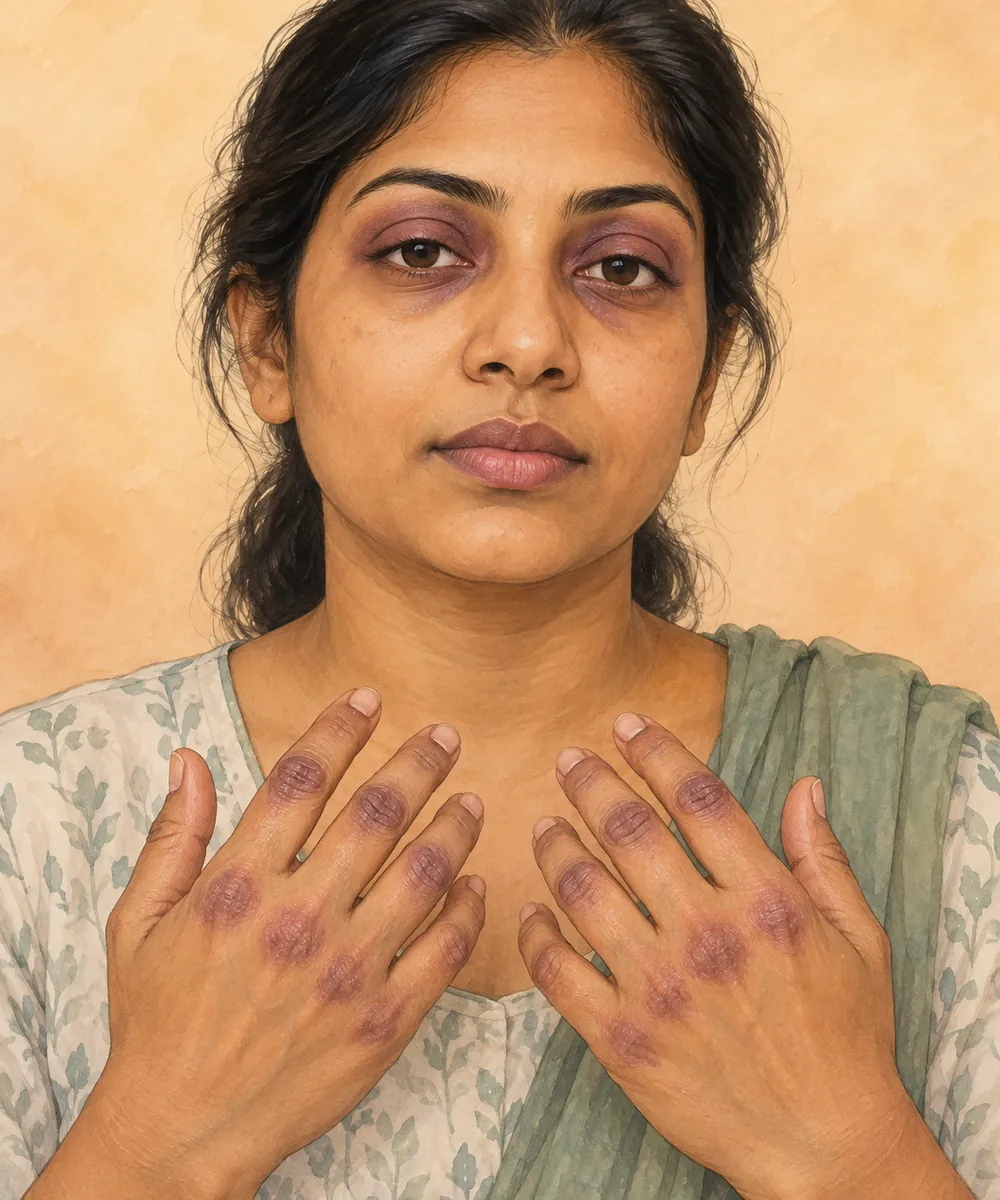
What skin changes can dermatomyositis cause?
Dermatomyositis can cause a rash:
- On or around the upper eyelids
- Over the knuckles, elbows or knees
- Around the fingernails
- On the scalp, neck, upper chest or upper back
The rash may itch, feel sore or become scaly. Sun exposure can make it worse. On darker skin, affected areas may appear brown, purple, grey or darker than the surrounding skin rather than bright red.
A rash can appear before muscle weakness. Some people have characteristic skin changes without developing obvious weakness. Show your clinician any new or persistent rash, even if you feel physically strong.
Can myositis affect other parts of the body?
It can, although not everyone develops these problems.
Swallowing: Weakness of the muscles used to swallow can make food feel stuck, cause coughing or choking during meals, or make it hard to swallow tablets or liquids. This needs assessment because it can affect nutrition and allow food or drink to enter the airway.
Lungs: Some types of myositis are associated with interstitial lung disease, which causes inflammation and sometimes scarring in the lungs. Symptoms may include a persistent dry cough or breathlessness, particularly during activity. Occasionally, lung disease needs urgent treatment.
Heart: Heart involvement is less common, but your team may check for it if you have symptoms or findings that raise concern.
Joints and general health: Some people develop joint pain or swelling, fatigue, weight loss or difficulty managing daily activities.
How is myositis diagnosed?
There is no single test that diagnoses every type of myositis. Your clinician will ask when the weakness began, which activities have become difficult, and whether you have a rash, swallowing difficulty or breathing symptoms. They will examine your muscle strength and skin.
Tests may include:
- Blood tests: These can measure muscle enzymes such as creatine kinase, or CK, which may rise when muscle is damaged. Other tests look for particular immune-system antibodies and check your general health. A normal or only slightly raised CK does not rule out every form of myositis.
- MRI of the muscles: This can show areas of muscle inflammation or damage and may help select a site for biopsy.
- Electromyography, or EMG: This measures electrical activity in muscles and can help distinguish a muscle problem from a nerve problem.
- Muscle biopsy: A small sample of muscle is examined under a microscope. It can help identify the type of muscle disease.
- Skin biopsy: This may help assess a rash, particularly when the diagnosis is uncertain.
- Lung tests: Breathing tests and, when needed, a CT scan can check for lung involvement.
Not everyone needs every test. Other conditions—including thyroid disease, medicine-related muscle problems and inherited muscle disorders—can also cause weakness, so your clinician may check for these.
Why might I need cancer screening?
In some adults with newly diagnosed inflammatory myositis, particularly certain forms of dermatomyositis, the chance of an underlying cancer is increased around the time the myositis begins. This does not mean that most people with myositis have cancer.
Your clinician will consider your age, type of myositis, symptoms, examination and antibody results before recommending screening. They may advise routine age-appropriate screening and, for some people, additional tests. Screening plans are individual; they are not the same for every person with myositis.
How is myositis treated?
Treatment depends on the type of myositis, the degree of weakness and whether the skin, lungs or swallowing muscles are involved. A rheumatologist may work with a dermatologist, lung specialist, neurologist, physiotherapist and other professionals.
For many types of inflammatory myositis, treatment may include:
- Steroids, which can control inflammation relatively quickly. The dose and duration depend on how active the disease is.
- Other medicines that calm the immune system, often started to control the disease and reduce the amount of steroid needed over time.
- Intravenous immunoglobulin or other specialist treatments when the disease is severe, affects swallowing, or has not responded adequately to initial treatment.
- Treatment for skin symptoms, which may include creams and medicines taken by mouth.
- Treatment for lung disease, chosen according to its severity and how it changes over time.
These medicines require follow-up and sometimes regular blood tests. Steroids can cause side effects such as raised blood sugar, weight gain, weaker bones and an increased chance of infection. Your team will discuss ways to reduce these risks and will adjust treatment as your condition changes. Do not stop steroids suddenly unless your clinician tells you to.
Is inclusion body myositis treated in the same way?
Usually not. Inclusion body myositis often does not respond well to the immune-suppressing medicines used for other forms of myositis. Care focuses on maintaining function, preventing falls, assessing swallowing, and finding practical ways to manage daily activities. Your specialist will explain whether any medicine is appropriate for your situation.
Will exercise make my muscles worse?
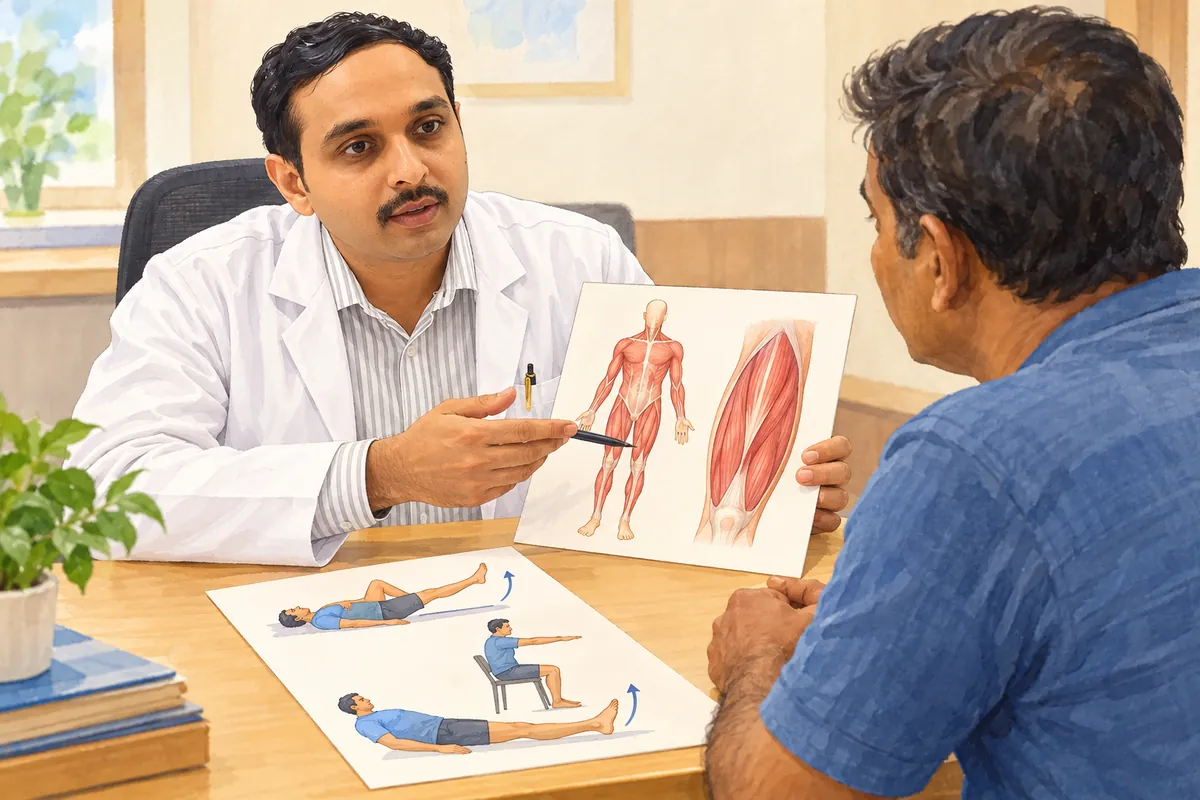
A planned exercise programme can help people with myositis maintain strength and function. A physiotherapist can tailor activity to your present strength and increase it gradually. The programme may include gentle strengthening, walking or other aerobic activity, balance work and exercises that help with everyday tasks.
Avoid pushing through marked weakness or trying to return immediately to your previous level of exercise. Tell your team if an activity leaves you substantially weaker, causes repeated falls or becomes harder despite treatment. They can adjust the programme and check whether the disease is active.
An occupational therapist can suggest ways to make dressing, bathing, cooking and work easier while your strength recovers.
What can I do about swallowing problems?
Tell your clinician promptly if you cough or choke while eating, avoid certain foods because they are hard to swallow, or feel that food is getting stuck. A swallowing specialist can assess what is happening and recommend safer ways to eat and drink. A dietitian can help if you are losing weight or struggling to get enough nutrition.
Seek urgent help if you cannot swallow liquids or saliva, repeatedly choke, or develop breathing difficulty after swallowing.
How can I care for my skin?
If you have dermatomyositis, protecting your skin from sunlight can help reduce rash flares. Use shade and protective clothing, and apply a broad-spectrum sunscreen to exposed skin. Your clinician can advise on treatments for itching, scalp symptoms or persistent rash.
Tell your team if your rash is worsening even when your muscle strength seems better. Skin and muscle symptoms do not always improve at the same pace.
What if I want to become pregnant?
Talk with your specialist before trying to conceive. Planning gives your team time to assess disease activity and review your medicines. Some treatments must be changed well before pregnancy, while others may be continued under medical guidance.
Do not stop treatment on your own. Your specialist can work with your obstetric team to plan care during pregnancy and after delivery.
What will life with myositis be like?
The course of myositis varies considerably. Some people respond well to treatment and regain much of their strength. Others need longer-term treatment, rehabilitation or help with particular activities. Improvement in muscle strength may take months, even after inflammation has begun to settle.
Regular follow-up helps your team assess strength, skin symptoms, swallowing, breathing, medicine side effects and your ability to do the things that matter to you. Tell them about changes in function, not just changes in pain.
When should I seek medical help?
Seek urgent medical assessment if you develop:
- New or rapidly worsening breathlessness
- Difficulty breathing at rest
- Repeated choking or an inability to swallow liquids
- Quickly worsening weakness, especially if you cannot rise from a chair, walk safely or hold up your head
- Chest pain or fainting
Contact your treating team if you notice a new cough, worsening rash, increasing difficulty with stairs or lifting your arms, falls, unexplained weight loss, fever, or possible side effects from treatment.
Key points to remember
Myositis is a group of conditions, not one single disease. Muscle weakness is common, but skin, lung and swallowing symptoms may also need attention. Identifying the specific type guides treatment. Medicines and carefully planned rehabilitation can help many people, while ongoing review allows treatment to change as your needs change.
This is general patient information. Your specialist will tailor tests, treatment and follow-up to your type of myositis.