Juvenile idiopathic arthritis, or JIA, is a group of conditions that cause ongoing joint inflammation in children. It may cause swelling, stiffness, pain, or difficulty moving a joint. The word idiopathic means that the exact cause is unknown.
JIA begins before the age of 16. Doctors usually consider the diagnosis when arthritis has lasted for at least six weeks, after checking for other possible causes. This does not mean you should wait six weeks before having a child with a swollen joint assessed.
JIA was previously called juvenile rheumatoid arthritis. It is not simply the childhood version of adult rheumatoid arthritis. It has several forms, and children can have very different symptoms and treatment needs.
What causes JIA?
The exact cause is not known. In most forms, the immune system causes inflammation in the joints. Systemic JIA also causes inflammation elsewhere in the body.
JIA is not caused by ordinary play, exercise, or something a parent did. It does not spread from one child to another.
What are the different types?
Your child’s doctor may use one of these names:
- Oligoarticular JIA: Arthritis affects a small number of joints, often a knee or ankle.
- Polyarticular JIA: Arthritis affects five or more joints. It can involve the small joints of the hands and feet as well as larger joints.
- Enthesitis-related arthritis: Arthritis occurs along with inflammation where a tendon or ligament attaches to bone. A child may have heel pain, hip pain, or back stiffness.
- Juvenile psoriatic arthritis: Arthritis may occur with psoriasis, nail changes, or swelling of a whole finger or toe. Skin changes do not always appear before the arthritis.
- Systemic JIA: Inflammation can cause repeated high fevers, a temporary rash, and symptoms elsewhere in the body, as well as arthritis.
- Undifferentiated JIA: A child’s symptoms do not fit neatly into one of the other groups.
The type may become clearer over time. Your child’s care will be guided by their symptoms and examination, not only by the name of the subtype.
What symptoms should I look for?
Children do not always say that a joint hurts. You may instead notice that your child:
- Limps, especially after waking up or resting
- Is slow to get moving in the morning
- Avoids running, climbing stairs, or using one hand
- Has a swollen knee, ankle, wrist, finger, or another joint
- Cannot fully straighten or bend a joint
- Seems unusually tired or irritable
A joint with JIA may be swollen and stiff without looking very red. Symptoms can improve and worsen over time. JIA can also affect the jaw joint, making chewing or opening the mouth uncomfortable.
Some children have symptoms outside the joints. These can include a recurring fever or rash in systemic JIA, psoriasis or nail changes in juvenile psoriatic arthritis, or eye inflammation called uveitis.
Why are eye examinations important?
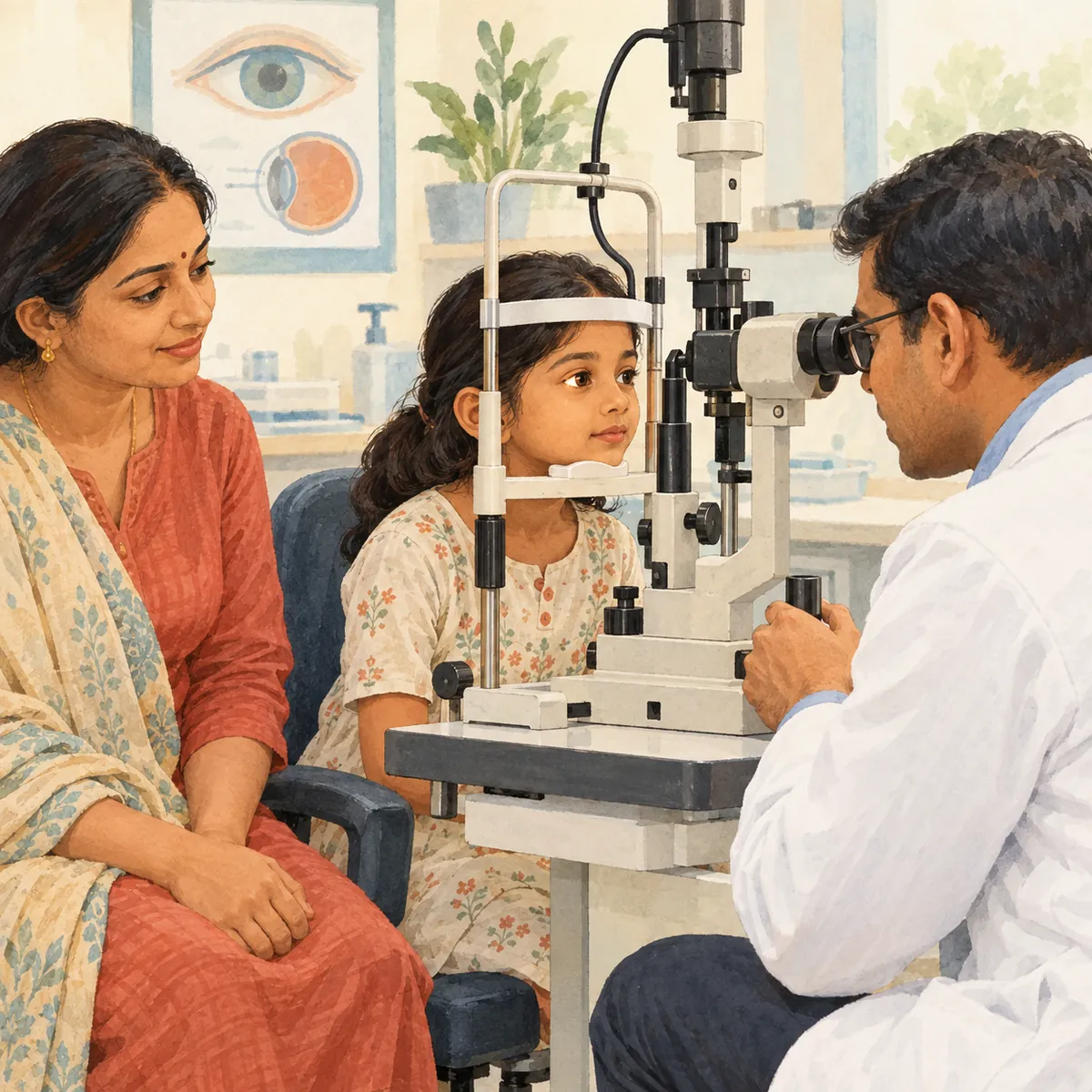
JIA can cause inflammation inside the eye. In some children, this develops without redness, pain, or a change in vision. An eye specialist called an ophthalmologist can detect it before a child notices symptoms.
Children with JIA need eye examinations on a schedule chosen for their individual risk. Keep these appointments even if your child’s eyes look normal and their arthritis is well controlled. If your child develops eye pain, redness, sensitivity to light, or a change in vision, seek prompt medical advice rather than waiting for the next scheduled examination.
How is JIA diagnosed?
There is no single blood test that confirms or rules out JIA. The doctor will ask when symptoms began, examine your child’s joints and general health, and consider other causes of swelling or pain.
Tests may include:
- Blood tests to look for inflammation and check blood counts and organ function. Tests such as ANA or rheumatoid factor can help with assessment, but their results alone do not diagnose JIA.
- Imaging, such as ultrasound, X-rays, or MRI, when the examination does not give enough information or a particular joint needs a closer look.
- Tests for other conditions if symptoms suggest an infection or another illness.
Tell the doctor about fevers, rashes, weight changes, recent illnesses, and changes in your child’s activities. These details can be as useful as a test result.
How is JIA treated?
Treatment aims to stop inflammation, protect the joints and eyes, relieve symptoms, and help your child take part in everyday life. A paediatric rheumatologist will usually guide treatment.
Depending on the type and severity of JIA, treatment may include:
- Anti-inflammatory medicines, such as ibuprofen or naproxen, for pain and stiffness. Follow your child’s prescribed dose; children’s doses depend on their circumstances.
- A steroid injection into an affected joint, particularly when only a few joints are inflamed.
- Disease-modifying medicines, such as methotrexate, when more sustained control is needed.
- Biologic medicines, which target particular parts of the inflammatory process. The choice depends on the type of JIA and whether the eyes or other parts of the body are affected.
- Steroid medicines by mouth or through a vein in selected situations. Doctors aim to limit prolonged steroid use in children because of its side effects.
Your child may also benefit from physiotherapy or occupational therapy. The treatment plan may change as the disease responds. Regular examinations and blood tests help the team check both disease activity and medicine safety. Treatment differs substantially between JIA types, especially for systemic JIA.
Can my child go to school and play?
Usually, yes. The goal of treatment is to help children participate in school, play, and activities they enjoy. Movement helps maintain strength and joint flexibility. During a flare, your child may need short rests or adjustments to an activity.
Tell teachers if morning stiffness makes writing, walking between classrooms, or arriving on time difficult. Simple changes, such as extra time or help carrying a heavy schoolbag, may be useful. Your child’s doctor or therapist can advise on suitable activity during a flare and as symptoms improve.
Will my child have JIA forever?
The course varies. Some children have a period of arthritis that settles; others need treatment for years or have symptoms that return after improvement. With timely treatment and follow-up, many children can remain active and grow up doing the things they enjoy.
Continue follow-up as advised, including eye screening. Feeling well does not always show whether inflammation has completely settled.
When should I contact a doctor?
Arrange a medical assessment if your child has a persistently swollen joint, a limp that does not settle, or repeated morning stiffness.
Contact your child’s treating team if symptoms worsen, a new joint becomes swollen, your child develops medicine side effects, or you are concerned about a fever or infection.
Seek urgent medical attention if your child has a hot, very painful joint with fever, is unable to bear weight, has a significant change in vision, or becomes seriously unwell. These symptoms need prompt assessment and should not automatically be assumed to be a JIA flare.