Osteoporosis is a condition in which bones become weaker and more likely to break. A bone may fracture after a fall from standing height or another minor injury that would not usually break a healthy bone. This is called a fragility fracture.
The hip, spine, and wrist are common sites of fracture. A hip fracture can seriously affect a person’s ability to walk and live independently. A fracture in the spine can cause back pain, loss of height, or a more rounded posture. Some spine fractures cause little pain and are discovered only during an examination or scan.
Osteoporosis itself usually causes no symptoms before a fracture. That is why assessing fracture risk matters even when you feel well.
What is osteopenia?
Osteopenia means low bone density: bone density is below the expected range but has not reached the level classified as osteoporosis.
A person with osteopenia may still have a significant risk of fracture. Bone density is only one part of the picture. Age, previous fractures, falls, medicines, and other health conditions also matter.
Who is more likely to develop osteoporosis?
The risk increases with age, particularly after menopause. Other factors include:
- Having broken a bone after a minor fall or injury
- Having a parent who broke a hip
- Taking steroid medicines, such as prednisolone, for a prolonged period
- Having a low body weight
- Smoking or drinking excessive alcohol
- Having rheumatoid arthritis or certain other long-term conditions
- Having conditions that affect hormones or the absorption of nutrients
- Having frequent falls
Men can develop osteoporosis too. If you have a condition or take a medicine that increases your risk, you may need an assessment at a younger age.
How do I know if I have osteoporosis?
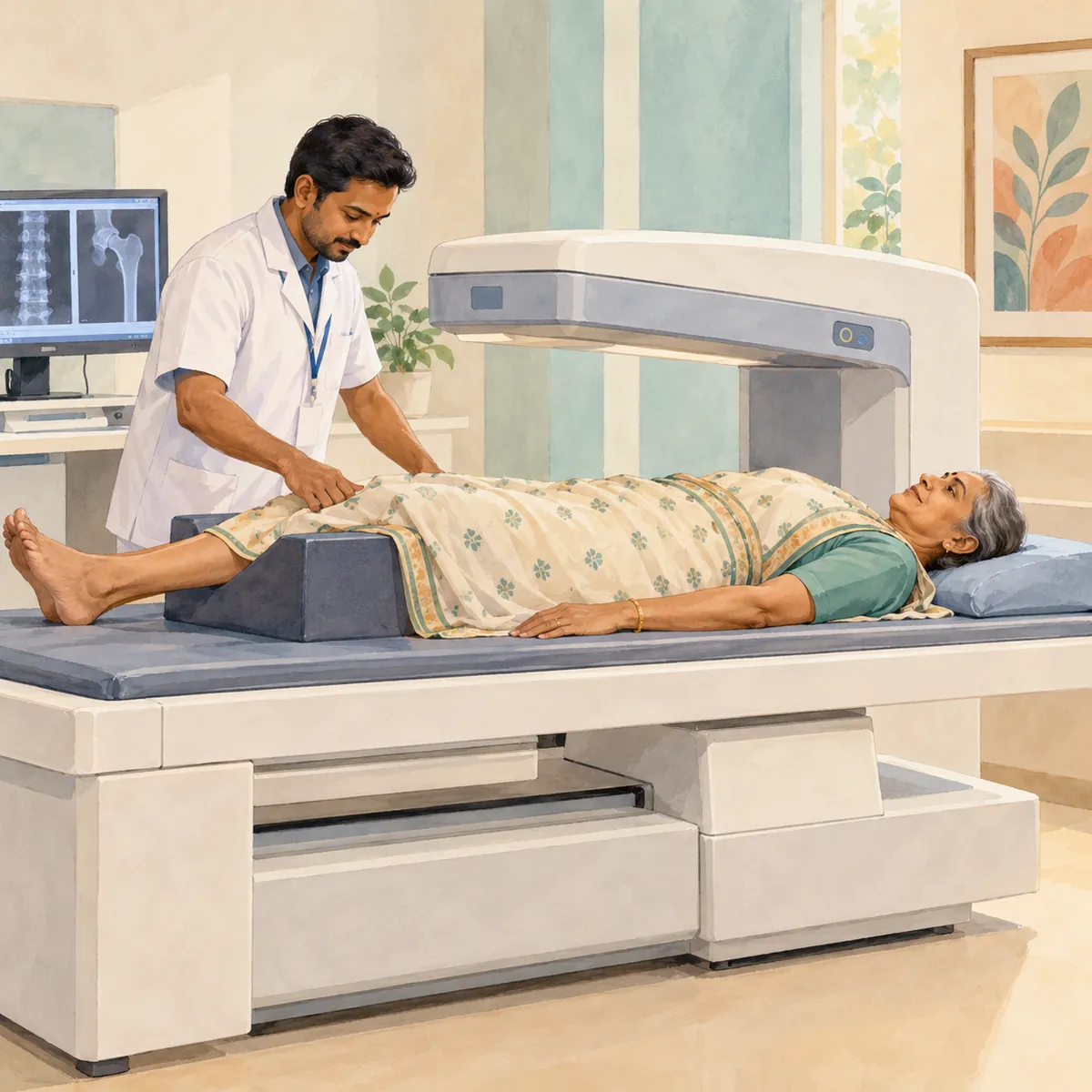
Your doctor will ask about fractures, falls, medicines, and other risk factors. They may recommend a DXA scan, which measures bone mineral density, usually at the hip and lower spine. It is a painless test that uses a small amount of radiation.
You may also need blood tests to look for conditions that contribute to bone loss or to help plan treatment. If you have lost height or developed new back pain, your doctor may check for a spine fracture.
A fracture after a minor fall deserves a bone health assessment, even if you have never had a DXA scan.
What does a DXA result mean?
A DXA report often includes a T-score. For women after menopause and men aged 50 or older, the usual categories are:
| T-score | Meaning |
|---|---|
| −1.0 or higher | Bone density is in the normal range |
| Between −1.0 and −2.5 | Low bone density, also called osteopenia |
| −2.5 or lower | Osteoporosis |
A lower score generally means a higher fracture risk, but the score does not tell the whole story. Your doctor will consider your fractures and other risk factors when deciding whether treatment is needed. Different measures are used to interpret bone density in younger adults.
Who needs a DXA scan?
Testing is commonly considered for older adults and for younger people with important risk factors. These include a previous fragility fracture, prolonged steroid treatment, or a condition associated with bone loss.
The right time to test depends on your age, medical history, and local clinical guidance. Ask your doctor if a DXA scan would help guide your care.
What can I do to protect my bones?
Several everyday measures can help:
- Get enough calcium. Milk, curd, cheese, calcium-fortified foods, and some other foods can contribute to your intake. Your doctor or dietitian can help if you avoid dairy or have dietary restrictions.
- Get enough vitamin D. Some people need a supplement, particularly if their intake or vitamin D level is low. Ask your doctor what amount is appropriate for you.
- Stay physically active. Walking and other weight-bearing activities are useful. Strength and balance exercises can improve muscle function and reduce falls. Choose exercises that are safe for your fracture risk and abilities.
- Stop smoking if you smoke.
- Limit alcohol.
- Manage conditions and medicines that affect bone health with your doctor.
Calcium and vitamin D support bone health, but supplements alone are not a substitute for osteoporosis medicine when your fracture risk is high.
How can I lower my risk of falling?
Preventing falls is an important part of preventing fractures. You can:
- Keep walkways clear of loose rugs, wires, and clutter.
- Make sure stairs, bathrooms, and corridors are well lit.
- Wear well-fitting shoes with soles that grip.
- Have your eyesight checked.
- Ask your doctor to review medicines that make you sleepy or dizzy.
- Work on leg strength and balance if you can do so safely.
- Use a walking aid if it has been recommended for you.
Tell your doctor if you have fallen recently or feel unsteady. Even a fall that did not cause an injury is worth discussing.
When is medicine needed?
Your doctor may recommend medicine if you have osteoporosis, have already had a fragility fracture, or have a high risk of fracture for other reasons. Some people with osteopenia also need medicine.
The choice depends on your fracture risk, kidney function, other health conditions, previous treatment, and preferences. Osteoporosis medicines reduce the likelihood of future fractures; they cannot guarantee that a fracture will never occur.
What medicines are used?
The main options include:
- Bisphosphonates: Medicines such as alendronate, risedronate, and zoledronic acid slow bone breakdown. They are common first treatments. Some are tablets; others are given through a vein.
- Denosumab: An injection that slows bone breakdown. It is usually given every six months.
- Bone-building medicines: Medicines such as teriparatide or romosozumab may be considered for people at very high fracture risk. A medicine that slows bone loss is usually needed afterward to preserve the benefit.
- Other medicines: Certain people may be offered other treatments based on their circumstances.
You and your doctor can discuss the expected benefit, practical schedule, and possible side effects of each option.
How do I take a bisphosphonate tablet?
Instructions vary by medicine, so follow those given with your specific prescription. Many bisphosphonate tablets must be taken with plain water on an empty stomach. You then need to remain upright and wait before eating, drinking anything else, or taking other medicines.
Taking the tablet correctly helps it work and reduces irritation of the food pipe. Tell your doctor if you have difficulty swallowing or cannot follow the instructions; another treatment may suit you better.
What should I know about denosumab?
Denosumab injections must be given on schedule. If treatment is delayed or stopped without another medicine, bone loss can occur rapidly and the risk of spine fractures can rise.
If you are considering stopping denosumab, speak to your doctor before missing an injection. They will plan the next treatment. A planned pause that may sometimes be considered for bisphosphonates does not apply to denosumab.
Are osteoporosis medicines safe?
All medicines can have side effects. Most people can take osteoporosis treatment safely when the medicine is chosen for their circumstances and monitored appropriately.
Rare problems have been reported with some long-term treatments, including unusual thigh bone fractures and problems with healing of the jaw bone. These risks need to be weighed against the risk of fractures from untreated osteoporosis. Tell your doctor about persistent new thigh or groin pain, and keep up routine dental care.
Your doctor will review treatment periodically. Do not stop a medicine because you have heard it should be paused after a fixed number of years. Whether to continue, change, or pause treatment depends on the particular medicine and your current fracture risk.
How will I know if treatment is working?
The main goal is to prevent fractures. Your doctor may repeat a DXA scan after an appropriate interval and may use blood tests to check for problems or monitor treatment.
Bone density does not have to rise dramatically for a medicine to be beneficial. Stable bone density and no new fractures may be reassuring. Tell your doctor if you fracture a bone while on treatment so they can review the plan.
How long will I need treatment?
It depends on your fracture risk and the medicine you take. Some people need long-term treatment. Others may be considered for a monitored pause after several years of a bisphosphonate if their risk has become lower.
Denosumab requires a planned transition to another treatment if it is stopped. Bone-building medicines are generally given for a limited course and followed by a medicine that maintains their effect. Your doctor will explain the schedule that applies to you.
When should I contact a doctor?
Seek medical advice if you:
- Fall and think you may have broken a bone
- Develop sudden or persistent new back pain
- Notice a marked loss of height or a change in posture
- Have repeated falls or feel increasingly unsteady
- Have trouble taking your osteoporosis medicine or develop a possible side effect
- Are due for a denosumab injection and may not be able to receive it on time
A fracture after a minor injury is a reason to assess bone health and plan how to reduce the chance of another fracture.